The evacuation order came at 5:40 in the morning with about forty minutes of warning, and the bag that had been sitting in the closet for three years went into the car without being opened. At the shelter it turned out to contain a 2,000-piece first aid kit of individually wrapped plasters, a rain poncho the thickness of a sandwich bag, a whistle, and no phone charger, no prescription list, and no cash. Everything in it had been chosen by whoever assembled the kit for the lowest possible unit cost.
The things people forget, which matter most
Start here, because these are what is actually missing from most bags:
- Prescription medication — a week’s worth, rotated so it does not expire. Plus a printed list of every medication with dosage and the prescribing doctor. A pharmacy in another state can fill from the list. They cannot fill from your memory at 2 a.m.
- Cash in small bills. 100 to 200 dollars in fives, tens and twenties. Card readers do not work when the power or the network is down, and nobody can break a fifty.
- A phone charger and a power bank, already charged. A 10,000 mAh bank is two to three phone charges. Charge it every six months; it self-discharges.
- Copies of documents — identity, insurance declaration pages, prescription list — on paper and on an encrypted USB drive.
- Glasses. An old prescription pair is better than none. Contacts are a poor plan for three days with uncertain hand-washing.
- A paper map of your region. Phone navigation fails exactly when everyone is using it at once.
Water and food
You cannot carry three days of water. One gallon a day per person is eight pounds a day — twenty-four pounds for one person for three days, which is the entire weight budget.
So carry one day and carry the means to make more:
- Two or three one-litre bottles per person
- A squeeze or straw filter — a Sawyer Mini or LifeStraw, around twenty dollars, filters thousands of litres and weighs two ounces
- Purification tablets as a backup. They handle viruses, which most filters do not
Food: calorie-dense, no cooking, no water needed, and that you will actually eat under stress.
- Nut butter packets, jerky, trail mix, tuna pouches
- Hard candy or glucose tablets — genuinely useful for morale and for anyone diabetic
- Skip anything needing hot water unless you are also carrying a stove and fuel
Around 1,200 to 2,000 calories per person per day. Two or three pounds of food per person covers it.
Warmth, which is the actual danger
Exposure hurts people in evacuations far more often than hunger does. Three days without food is unpleasant. One cold wet night is a medical emergency.
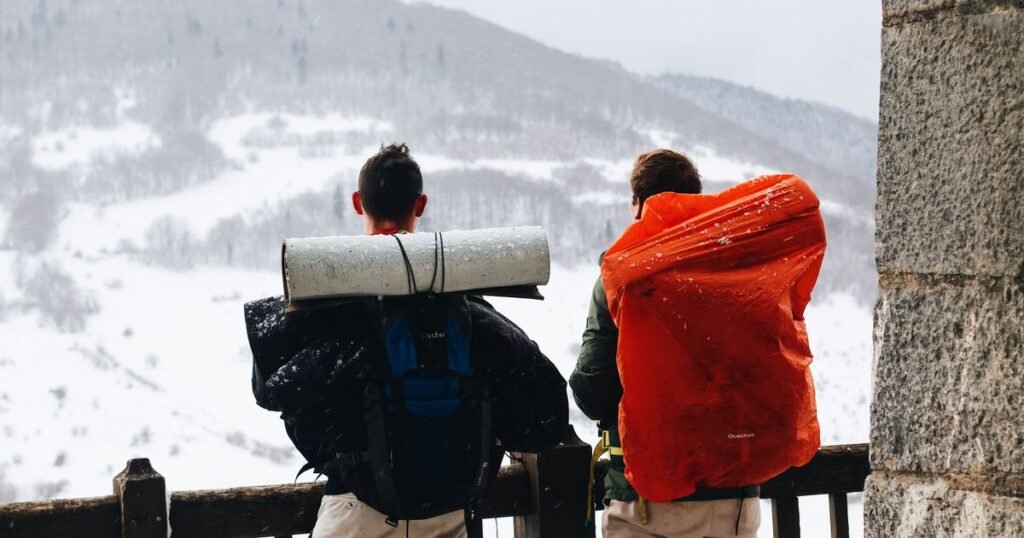
- A proper rain jacket. Not an emergency poncho — those tear the first time you move in one.
- A warm layer, fleece or synthetic. Not cotton: wet cotton holds water against the skin and actively cools you. This is the single most important material rule on the list.
- Hat and gloves, regardless of season.
- Dry socks. Two pairs, wool or synthetic. Disproportionately improves a bad day.
- An emergency bivvy — the heavier orange or olive kind, not the thin silver sheet. Ten dollars, three ounces, and you can actually sleep in it.
Light, tools, first aid
- A headlamp with the batteries stored separately, taped to it.
- A multi-tool or a decent folding knife.
- Duct tape, wrapped around the water bottle rather than a full roll.
- A hand-crank or battery NOAA radio. When the network is down, broadcast is how information still reaches you.
- Real first aid, meaning: gauze pads, a roll of cohesive bandage, medical tape, tweezers, antiseptic wipes, ibuprofen, an antihistamine, anti-diarrhoeal, and any personal rescue medication. That beats a 200-piece box of tiny plasters by a wide margin.
The things that mostly add weight
Common in pre-made kits, rarely worth their mass:
- Giant plaster assortments. You will use four.
- Thin emergency ponchos and silver blankets. They tear and they do not insulate against the ground.
- Tiny sewing kits, fishing line, snare wire. This is wilderness-survival thinking applied to a three-day displacement.
- Multiple knives. One good one.
- Canned food. Heavy, and needs an opener.
- Water in large rigid containers. Impossible to pack and the first thing abandoned.
Things that are not gear
- A written meeting point and an out-of-state contact everyone knows. Local phone circuits jam; long-distance often works when local does not.
- A printed photo of each family member, especially children, for the situation nobody wants to plan for.
- Pet supplies — food, a leash, the vaccination record, a carrier. Many shelters require proof of vaccination.
- Comfort items for children. One small familiar thing does more for a child in a shelter than any piece of equipment in the bag.
Maintaining it
Twice a year, at the clock change:
- Rotate the medication and check expiry dates.
- Recharge the power bank.
- Check that clothing still fits the child it was packed for.
- Swap seasonal layers.
- Replace the cash if it has been borrowed. It always has.
- Pick it up. If it has got heavier, take something out.
And keep it where you can reach it in forty seconds without turning on a light. A perfect bag in the back of the attic is not a bag you leave with.