The bill was 312 dollars in a month when nobody was home for nine days, and the only explanation offered on the page was a number next to the word “Usage”. Calling produced a representative who read the same number back. The actual answer was on page two, in a line called “Estimated read”, which meant nobody came to the meter and the company had guessed — high — and would keep guessing until someone asked them not to.
The bill is in two halves
In most of the United States, an electric bill splits into two parts that behave completely differently.
Supply — the electricity itself. Priced per kilowatt-hour. In a deregulated state, this is the part you can shop for.
Delivery — moving it through wires to your house. Your local utility, no competition, no choice.
The surprise for most people is the proportion: delivery is frequently 40 to 60 percent of the total. Which means a supplier offering “20 percent off electricity” is offering 20 percent off roughly half your bill — about a tenth of what you pay.
The lines, in plain terms
- kWh used — the one number that reflects what you actually did. A kilowatt-hour runs a 100-watt bulb for ten hours.
- Meter read: actual vs estimated — the most important word on the page. Estimated means guessed.
- Basic / customer / service charge — a flat monthly fee for being connected. You pay it if you use nothing at all. Typically 10 to 25 dollars.
- Supply charge — kWh × the supply rate.
- Distribution / delivery charge — kWh × the delivery rate.
- Demand charge — on some plans, based on your single highest 15-minute spike in the month, not your total. If you have one of these, running the dryer and the oven together is expensive in a way the kWh number never shows.
- Riders, surcharges, adjustments — fuel cost adjustments, renewable mandates, decommissioning charges. Not negotiable and not errors.
The four things actually worth checking
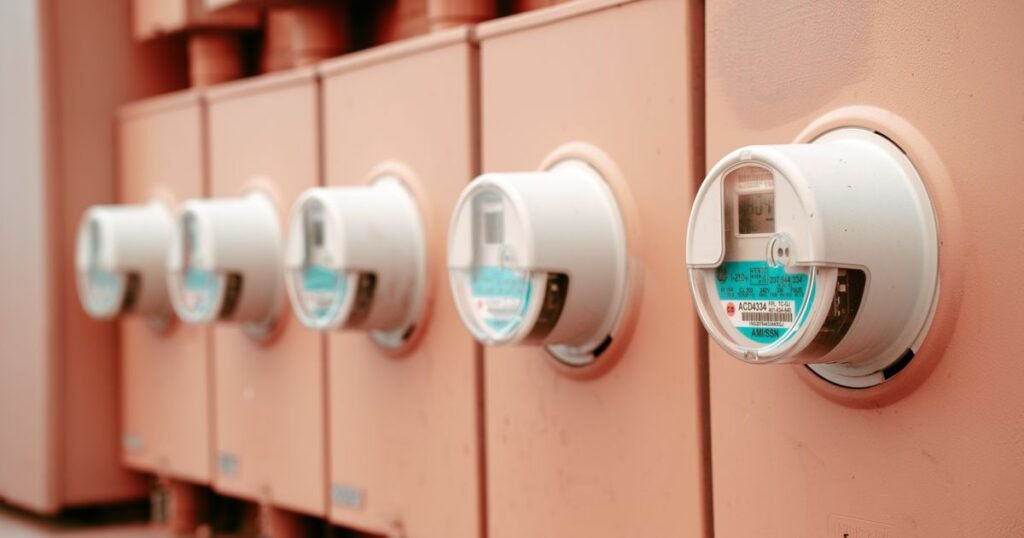
1. Is this an estimated read? Utilities estimate when nobody can access the meter. Estimates tend to run high, and they self-correct eventually — but the correction can be months away. Find the meter, read the numbers left to right, and call with an actual figure.
2. Compare against the same month last year, not last month. Every bill shows a 12-month bar chart. July against June tells you nothing; July against last July tells you whether something changed. A bill that is 40 percent above the same month a year ago, with no new appliance and no new occupant, is worth investigating.
3. Are you on the right rate plan? This is where real money sits. Most utilities offer more than one structure and default everyone to the standard one:
- Flat rate — same price all day. Simple, and usually the worst deal if your usage is flexible.
- Time-of-use — cheap overnight and on weekends, expensive on weekday afternoons. If you can run the dishwasher, laundry and EV charging after 9 p.m., this is frequently 20 to 30 percent cheaper.
- Tiered — the first block of kWh is cheap and the price climbs as you use more. Punishes heavy users.
Call and ask: “Which rate plan am I on, what else do you offer, and can you run my last twelve months against each one?” Most utilities will do that calculation for you and most customers never ask.
4. Is there a third-party supplier on the bill? In deregulated states, a salesperson at a door or a mall kiosk may have signed you onto a supplier with a teaser rate that expired into something much higher. Look for a company name that is not your utility in the supply section. Compare its rate against your utility’s standard offer — your state’s public utility commission publishes the comparison. Switching back is usually free.
Finding what is using it
If the bill is right and the usage is genuinely high, the cause is almost always one of a short list:
- Heating and cooling — typically half of a home’s electricity. A heat pump stuck in emergency resistance heat can double a winter bill on its own.
- Water heater — the second biggest. A failed lower element makes the upper one run constantly.
- An old second refrigerator in the garage. A 1998 unit can cost 150 dollars a year by itself.
- A well pump or sump pump cycling because of a leak or a stuck float.
- Space heaters. 1,500 watts each. One running in a bedroom all winter adds roughly 100 dollars a month.
To find it rather than guess: most utilities now publish hourly usage data in the online account. Look at a 24-hour graph. A flat baseline that never drops below a high floor points to something always-on. Regular spikes every twenty minutes through the night points to a pump or a compressor cycling.
A plug-in energy monitor — about twenty dollars — settles arguments about individual appliances in an afternoon.
If you think it is wrong
- Read the meter yourself and write down the number and the date.
- Call and ask specifically: “Was this an actual or estimated read?”
- If estimated, give them your reading and ask for a re-bill.
- If actual and still unexplained, request a meter test. Most utilities test free, or refund the fee if the meter is faulty.
- Ask about a budget billing or levelized plan while you are on the phone — it averages the year so January does not arrive as a shock.
- If you get nowhere, the escalation is your state public utility commission, not another call to the same queue. Utilities respond to commission complaints quickly.